

ERP Software
Research and reviews for enterprise resource planning systems (ERP software).
-
Want to compare top-rated ERP software?
Find the perfect solution here.
Download Free Report
Navigating ERP: A Buyer's Guide for Wholesale and Distribution
Start your software search here.
Download Free ReportAbout ERP Software
Enterprise Resource Planning (ERP) software unifies most if not all of a company’s operations under the umbrella of a single software system. This all-inclusive approach can include many modular functions that also exist as standalone solutions like manufacturing, supply chain management and financial management. Browse the best ERP software with Business-Software.com’s free comparison report of the Top 20 ERP Software solutions. Traditional ERP solutions are ideal for larger enterprises who have a need for software uniformity across multiple office sites. Among the top-rated ERP systems are:- Oracle JD Edwards EnterpriseOne
- SAP ERP
- Aptean ERP
- Netsuite ERP
Articles
-
ERP Software Reviews
ERP Software Reviews Articles
NetSuite vs SAP Business One in Australia (2026): Cost, Fit and Compliance
By
NetSuite vs SAP Business One for Australian businesses in 2026: multi-entity, GST and BAS, payroll, deployment and published AUD costs compared.

Best ERP Software in New Zealand (2026): An Independent Buyer’s Guide
By
Independent guide to the best ERP software in New Zealand for 2026: MYOB Acumatica, Business Central, NetSuite, Odoo and more, with NZD pricing.

Best MYOB Alternatives for Growing Australian Businesses (2026)
By
MYOB alternatives in Australia for 2026: MYOB Acumatica, Business Central, NetSuite, Odoo, Sage Intacct and Xero, with migration and payroll steps.
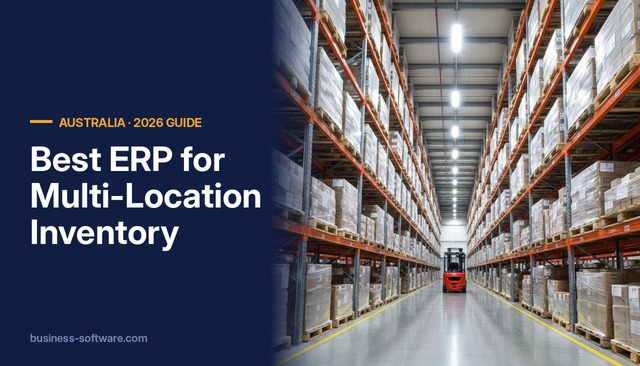
Best ERP for Multi-Location and Multi-Warehouse Businesses in Australia (2026)
By
The best ERP for Australian businesses with several branches or warehouses: inter-branch transfers, WMS depth, branch P&L and payroll tax by state.
-
Industry-Specific ERP
Industry-Specific ERP Articles

Best ERP for Ecommerce and Retail Businesses in Australia (2026)
By
Compare ERP for Australian ecommerce and retail: Shopify, Amazon AU, POS, Afterpay and pricing for Business Central, MYOB Acumatica and NetSuite.

Best ERP for SaaS and Subscription Companies in Australia (2026)
By
ERP for Australian SaaS and subscription businesses in 2026: AASB 15 revenue recognition, billing, deferred revenue and SaaS metrics compared.
Vendor Rebate Tracking Software for Distributors: How It Works and What Your Options Are
By
How distributors track supplier rebates: rebate types, ASC 705-20 monthly accruals, and how ERP modules and platforms like Enable and Vistex handle them.

Best ERP for Australian Manufacturers (2026): An Independent Buyer’s Guide
By
Epicor, NetSuite, MYOB Acumatica, Pronto Xi, Business Central, SAP Business One and Odoo compared for Australian manufacturers on MRP, payroll and cost.
-
Selecting & Implementing ERP
Selecting & Implementing ERP Articles
The Easiest ERP Systems to Implement in Australia, and the Most Scalable (2026)
By
Which ERP systems are easiest to implement in Australia, and which scale furthest? Published timelines, fixed-fee packages and limits compared.
ERP and Australian Tax Compliance (2026): GST, BAS, STP Phase 2, Payday Super and Peppol
By
What GST, BAS, STP Phase 2, Payday Super, TPAR, payroll tax and Peppol require of your ERP, and how six ERPs handle each in Australia.
QuickBooks to NetSuite Migration: What Moves, What Doesn't and How Long It Takes
By
What moves in a QuickBooks to NetSuite migration: open AR/AP, balances, history, cutover timing, NetSuite menu paths and published partner costs.

NetSuite Implementation in Australia (2026): Timeline, Cost and What Goes Wrong
By
What a NetSuite implementation really takes in Australia: realistic phases, AUD cost ranges, partner selection, and the failure modes that blow the budget.
-
Trends in ERP Software
Trends in ERP Software Articles

Better Together: Why PLM and ERP Work Best as a Team
By
By observing recent trends in PLM software and ERP software, we can see that traditional methods of separating the two systems are being proven obsolete by companies that are learning to respect and capitalize on the differences between them. Here’s what you need to know about how PLM software and ERP software work together.

AI ERP Security & Compliance: Protecting Your Business Intelligence
By
AI ERP systems process and analyze vast amounts of sensitive business data, making security and compliance critical success factors. Organizations must understand and address unique risks associated with artificial intelligence while maintaining robust protection for financial, operational, and customer information. This comprehensive guide provides frameworks for securing AI ERP implementations ... (more)
Top Trends in ERP for 2021
By
As technological innovations continue to advance, it’s important that IT departments embrace new trends and technologies. Inflexible and outdated ERP systems can determine whether or not a company succeeds. Below are the top ERP trends for 2021 to make sure your company keeps a competitive edge.

Two-Tier ERP Strategies: When & How Global Companies Use a Secondary ERP Layer
By
Two-tier ERP strategies are reshaping how multinational companies run their business systems. Instead of forcing every region or subsidiary to operate under one massive global ERP, enterprises now deploy a two-tier architecture: a powerful core ERP for corporate functions, and a lighter, more flexible ERP for local operations. The result is a balance between global
-
View All Blog Posts
Top ERP Blog Posts
Serial Number Tracking: How to Track Serialized Inventory From Receipt to Service
By
Serial number tracking for distributors and service firms: capture serials at receipt, shipping, warranty, RMA and repair, and how ERPs handle it.
ABC Analysis in Inventory: How to Classify Items and Use the Results
By
ABC analysis inventory guide: calculate annual usage value, set A/B/C cutoffs, link classes to counts, safety stock and buying, and how ERPs automate it.
Encumbrance Accounting: How Governments and Schools Track Commitments
By
Encumbrance accounting for governments and schools: journal entries from PO to invoice, year-end carryover, GASB 54 fund balance and software support.
Lot Tracking Software: How It Works and How to Choose
By
Lot tracking software compared: lot capture at receiving, FEFO picking, recall reports, and Business Central, NetSuite, Zoho, Cin7 and more with prices.
Popular ERP Solutions

NetSuite ERP
NetSuite ERP is Oracle's cloud ERP suite for growing and midsize companies, used by more than 44,000 customers. This review covers its features, quote-based pricing model, implementation timelines, Australia and New Zealand fit and the main alternatives.

Epicor Kinetic
Epicor Enterprise Resource Planning (ERP) software is a flexible and scalable ERP solution that is made to help companies reduce costs, streamline processes and improve customer responsiveness across the company. Epicor ERP can help companies make sure that all strategic process are aligned to help the company grow profitably.

Sage 300 ERP
Traditional ERP solutions deliver an automation platform that connects business areas such as accounting, manufacturing, warehouse, and distribution. These days, ERP solutions have developed to include marketing, sales, business analytics and customer service, using real-time KPI dashboards and business intelligence. Sage 300 ERP (formerly Sage ERP Accpac) provides both types of platforms, allowing users to securely connect business processes from every functional area of the company in real-time.

Global Shop Solutions
Global Shop Solutions ERP Software improves manufacturing processes throughout the enterprise with comprehensive functions that include job costing scheduling, inventory management, agile project management, quality management, customer relationship management and other shop control functionality. Business processes are integrated into a single, easy-to-use system, giving businesses complete control and visibility into their operations. Companies that have implemented Global Shop One-System ERP solutions have realized such benefits as improved quality and on-time delivery, increased sales and lowered costs.

IFS Applications
IFS Applications is an integrated ERP software solution that manages four core processes: project management, manufacturing, supply chain management and asset management. Combined with various solutions such as HR, financials, CRM and more, IFS Applications is a comprehensive ERP solution that can manage all of your business needs.

Infor CloudSuite Industrial (SyteLine)
Infor CloudSuite Industrial helps manufacturers and distributors of all types improve productivity and respond faster to change. From selling and sourcing to production and fulfillment, this robust enterprise resource planning (ERP) solution provides organization-wide visibility.