
ERP
OUM Differs From The AIM Methodology

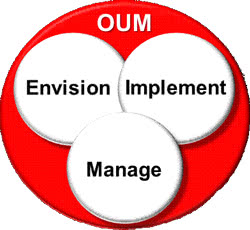
Anyone scoping an Oracle implementation eventually runs into the same question, first asked at an Oracle OpenWorld years ago and still searched today: how does Oracle Unified Method (OUM) differ from the older Application Implementation Method (AIM)? The short answer is that OUM replaced AIM, which Oracle retired on January 31, 2011, and it changed the approach from a phased, sequential model to an iterative one that spans the whole Oracle product line. Here is what actually separates the two, and how the picture looks in 2026 now that most new Oracle projects are cloud implementations.
Key takeaways
- AIM was retired on January 31, 2011. OUM is its successor and Oracle’s standardized implementation method.
- The core difference is approach: AIM was largely phased and sequential, while OUM is iterative and use-case driven.
- OUM covers the full Oracle portfolio, not just E-Business Suite: PeopleSoft, JD Edwards, Siebel, BI and EPM, and cloud services.
- OUM leans on UML and graphical models, ready-made templates, and a scalable work breakdown structure, and is available to Oracle partners through the Oracle Partner Network.
- In 2026, OUM is a mature method; new Oracle Fusion Cloud projects increasingly use cloud-native, agile approaches built around quarterly updates.
What AIM and OUM are
The Application Implementation Method (AIM) was Oracle’s long-standing methodology for implementing its applications, best known in the E-Business Suite era. Oracle retired it on January 31, 2011. The Oracle Unified Method (OUM) is what replaced it: a standards-based method with roots in the unified process, designed to bring every Oracle product under one consistent implementation approach rather than a separate method per product line. If you are comparing the two, you are really comparing a legacy method with the successor that superseded it.
How OUM differs from AIM
The differences are practical, not just cosmetic. They change how a project is structured, what gets produced, and how the team handles change along the way.
| Dimension | AIM (retired 2011) | OUM (successor) |
|---|---|---|
| Approach | Largely phased and sequential | Iterative: refine in cycles while holding cost and scope |
| Product coverage | Focused on E-Business Suite | Full portfolio: PeopleSoft, JD Edwards, Siebel, BI, EPM, cloud |
| Modeling | Document-heavy | Use-case driven, UML, strong emphasis on graphical models |
| Deliverables | Fixed set of documents | Templates and a scalable work breakdown structure you tailor |
| Access | Readily available | Provided to Oracle partners through the Oracle Partner Network |
The iterative model is the heart of it. Rather than trying to lock every requirement up front, OUM builds cycles into the project so the team can refine as it learns, a ‘think a little, do a little’ rhythm, while still keeping a firm grip on cost and scope. The emphasis on graphical representation is deliberate too: a diagram like OUM’s System Context view, which maps the boundary of the system and the actors that send or receive information across it, communicates more precisely than prose, where wording is easy to misread. And because OUM standardizes the method across every Oracle product, a team that learns it on one project can carry the approach to the next.
OUM in the cloud era
The version of this question from a decade ago assumed an on-premises E-Business Suite world. In 2026 that has shifted. OUM is now a mature method, updated over the years to cover application implementation, cloud services, upgrades, BI, and more, but most new Oracle work is Fusion Cloud Applications, and cloud projects run differently. With Oracle pushing quarterly updates rather than multi-year upgrade cycles, implementation teams increasingly favor cloud-native, agile approaches that fit that cadence, often drawing on OUM’s iterative principles rather than its full on-premises deliverable set. The practical takeaway: OUM remains a solid framework and a useful shared vocabulary, but match the method’s weight to the project. A large, complex, multi-pillar rollout still benefits from OUM’s structure; a focused cloud module does not need the full method pack.
Why it matters for your project
Methodology is not paperwork for its own sake. The right structure is what keeps an implementation on scope, on budget, and aligned with what the business actually asked for, and the wrong one, or none, is how projects drift. If your partner proposes OUM, you now know what that buys you: an iterative, template-driven, standardized approach with a strong modeling discipline. Ask how they will tailor it to your project rather than apply it by rote, since OUM is meant to be scaled to the situation, not followed as a rigid checklist. And if the project is a straightforward cloud implementation, expect a lighter, more agile flavor rather than the full legacy deliverable list.
Frequently asked questions
Is AIM still used? Oracle retired AIM on January 31, 2011, and OUM superseded it. You may still encounter AIM artifacts on very old implementations, but it is not Oracle’s current method.
What is the main difference between OUM and AIM? Approach. AIM was largely phased and sequential, while OUM is iterative and use-case driven, refining the solution in cycles. OUM also covers Oracle’s whole product line and leans heavily on UML and graphical models.
Which Oracle products does OUM cover? Unlike AIM’s E-Business Suite focus, OUM spans the portfolio, including PeopleSoft, JD Edwards, Siebel, business intelligence and EPM, plus cloud services and upgrades.
How do you get OUM materials? OUM is provided to Oracle partners through the Oracle Partner Network rather than being publicly downloadable. Your implementation partner will typically have access to the method pack and templates.
Does OUM still apply to Oracle Cloud implementations? Its iterative principles do, and OUM has been extended to cover cloud services. That said, new Fusion Cloud projects, built around Oracle’s quarterly update cadence, tend to use lighter, cloud-native agile approaches rather than the full on-premises deliverable set.
The verdict
OUM differs from AIM in the ways that matter on a real project: it is iterative rather than sequential, it spans every Oracle product instead of just E-Business Suite, and it puts models and reusable templates at the center instead of a fixed stack of documents. AIM has been retired since 2011, so for any current work OUM, or a cloud-native agile approach that borrows its principles, is the live choice. Treat the method as a framework to tailor, match its weight to the size of the project, and make sure your partner can explain how they will adapt it to you. That, more than the label on the methodology, is what keeps an Oracle implementation on track.
Planning an ERP implementation?
Compare the leading ERP platforms and read our vendor comparison reports before you commit.

Sherman Hsieh
Independent analysis of enterprise software — ERP, CRM and more