

Discrete Manufacturing
The Best Discrete Manufacturing Software in 2026

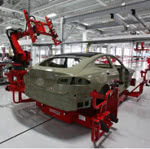
Discrete manufacturing makes countable, individual things: cars, computers, machinery, medical devices, furniture. Unlike process manufacturing, where you blend and batch, discrete production runs on bills of materials, routings, and work orders, often make-to-order or engineer-to-order. The software that runs it has to handle that complexity. This guide covers the best discrete manufacturing ERP systems in 2026, what changed since the market was last worth surveying, and how to pick one for a job shop or a growing manufacturer.
Key takeaways
- The field consolidated. Three names from the old version of this list, Macola, M1, and E2, are now all owned by ECI Software Solutions.
- Epicor Express is gone. It became Epicor Kinetic, the company’s cloud manufacturing ERP, and is a leading discrete option today.
- NetSuite is now Oracle NetSuite. Oracle acquired it, and it remains a strong cloud choice for growing manufacturers.
- Match the tool to your production style. Job shops, make-to-order, and high-mix discrete each favor different systems.
- ERP pricing is quote-based. Expect custom pricing tied to users, modules, and deployment, not a public price sheet.
What discrete manufacturing software has to do
Discrete manufacturing has requirements that general business software does not meet. Because production is built from components rather than continuous flow, the system has to handle multi-level bills of materials, detailed routings, and work-order tracking across the shop floor. Add customer-specific BOMs, engineering change management, capacity and material planning, and the ability to hand part of a routing to an outside supplier and bring it back in, and you have the core of what separates a real discrete ERP from generic accounting software.
The other requirement is visibility. A discrete manufacturer needs an accurate, current view of inventory, work in progress, and cost per job, because the margin on a make-to-order part is easy to lose to bad estimates or hidden rework. Modern systems add shop-floor data collection, quality tracking, and increasingly AI-assisted planning to keep that picture accurate.
What changed since this list was first written
Two shifts stand out. The first is consolidation. Three of the five systems from the original version of this guide, Exact Macola, ECI M1, and E2, are now owned by the same company, ECI Software Solutions, which assembled a portfolio of manufacturing ERPs aimed at small and mid-sized shops. The second is the move to cloud and the rebranding that came with it. Epicor Express, a cut-down edition of the old Epicor 9, no longer exists as such; Epicor’s manufacturing ERP is now Epicor Kinetic, a cloud-first platform. NetSuite, once independent, was acquired by Oracle and sells as Oracle NetSuite. If you are evaluating based on a list more than a few years old, half the names have changed hands or changed names.
The best discrete manufacturing software in 2026
These are the systems worth a serious look, grouped by who they fit. Pricing is quote-based across the category, so treat the notes as positioning rather than a price sheet.
| System | Best for | Deployment | Note |
|---|---|---|---|
| Epicor Kinetic | Mid-market discrete manufacturers | Cloud or on-premise | Successor to Epicor ERP / Express |
| Oracle NetSuite | Growing manufacturers, multi-entity | Cloud | Strong financials + ERP in one suite |
| Microsoft Dynamics 365 | Microsoft-centric shops | Cloud | Business Central (SMB) or F&O (enterprise) |
| Infor CloudSuite Industrial | Complex discrete & ETO | Cloud | Formerly SyteLine; deep manufacturing depth |
| ECI (M1, E2, Macola) | Small shops & job shops | Cloud or on-premise | Portfolio of SMB manufacturing ERPs |
Epicor Kinetic
Epicor Kinetic is the direct successor to the Epicor ERP line that included the old Epicor Express, rebuilt as a cloud-first platform aimed squarely at discrete manufacturers. It covers production management, scheduling, material and capacity planning, quality, and financials, with strong shop-floor and MES capabilities. It suits mid-market makers who have outgrown entry-level tools and want manufacturing depth without moving to a heavy enterprise suite. Third-party estimates put per-user cost in the low hundreds of dollars per month, but pricing is quoted per deployment.
Strengths: deep discrete manufacturing features, flexible cloud or on-premise deployment, and a clear upgrade path from older Epicor systems. Limitations: it is more than a very small shop needs, and a full implementation takes time and a capable partner.
Oracle NetSuite
NetSuite, now owned by Oracle, is a cloud ERP that pairs strong financials with manufacturing modules covering work orders, BOMs, planning, and shop-floor tracking. It is a natural fit for a growing manufacturer that wants one system for accounting, inventory, and production, especially across multiple entities or locations. Because it started as a financial suite, its accounting depth is a genuine advantage.
Strengths: one cloud suite for finance and manufacturing, strong reporting, and good multi-entity support. Limitations: its manufacturing depth is lighter than dedicated discrete specialists for very complex production, and costs rise as you add modules.
Microsoft Dynamics 365
Microsoft covers discrete manufacturing across two products: Business Central for small and mid-sized shops, and Finance & Operations for larger enterprises. Both integrate tightly with the Microsoft stack, from Office to Power BI to Teams, which is a real advantage if your business already runs on Microsoft. Manufacturing modules handle BOMs, routings, planning, and work orders.
Strengths: tight Microsoft integration, a clear small-to-enterprise path, and a large partner network. Limitations: the two products are quite different systems, so you must choose the right tier, and deep manufacturing features often need partner add-ons.
Infor CloudSuite Industrial (SyteLine)
Infor CloudSuite Industrial, long known as SyteLine, is built for complex discrete and engineer-to-order manufacturing. It handles advanced planning and scheduling, configure-to-order products, and mixed-mode production well, which makes it a strong pick for manufacturers whose products are intricate or highly customized. It is a specialist tool rather than a general suite.
Strengths: deep discrete and ETO capability, strong scheduling, and industry-specific configurations. Limitations: it is aimed at more complex operations, so a simple shop will find it heavier than needed, and implementation expertise matters.
ECI Software Solutions (M1, E2, Macola)
ECI now owns three of the systems from the original version of this list and positions them for small and mid-sized manufacturers. M1 is a flexible ERP for small manufacturers, E2 is aimed at job shops and make-to-order work with strong estimating, and Macola serves manufacturing and distribution. For a small shop that wants manufacturing-specific software without enterprise weight, the ECI portfolio is a practical place to start.
Strengths: purpose-built for small shops and job shops, strong estimating and job costing, and options across the portfolio. Limitations: less suited to large or highly complex manufacturers, and you are choosing among sibling products that overlap, so match the specific tool to your work.
What happened to the old picks
Every system on the original 2013 list is still traceable, but most have changed. Exact Macola, ECI M1, and E2 Shop System are now all part of ECI Software Solutions, which consolidated them into one manufacturing portfolio. NetSuite Manufacturing Edition is now Oracle NetSuite after Oracle’s acquisition. Epicor Express, the simplified edition of Epicor 9, was retired, and Epicor’s manufacturing ERP is now Epicor Kinetic. The through-line is consolidation and a move to the cloud, which is exactly why an old shortlist is a poor guide to a current purchase.
How to choose
Start with how you produce. If you run a job shop or make-to-order work, prioritize estimating, job costing, and scheduling, where E2 and Epicor Kinetic are strong. If your products are complex or engineer-to-order, Infor CloudSuite Industrial earns its place. If you want one cloud system for finance and manufacturing as you grow, Oracle NetSuite or Microsoft Dynamics 365 fit, with the Microsoft choice easy if you already live in that ecosystem. Then weigh deployment, since cloud lowers upfront cost and speeds implementation while on-premise gives more control. Finally, budget for implementation and a good partner, because an ERP that is configured badly costs far more than the license ever will.
Frequently asked questions
What is discrete manufacturing software? ERP and manufacturing software built for producing distinct, countable items from bills of materials and routings, as opposed to process manufacturing that blends or batches. It manages work orders, inventory, planning, and shop-floor execution for that style of production.
What is the difference between discrete and process manufacturing software? Discrete software is built around BOMs, routings, and assembly of countable units. Process software is built around formulas, recipes, and batches for products like food, chemicals, or pharmaceuticals. Some ERPs support both in a mixed-mode setup.
How much does discrete manufacturing ERP cost? Pricing is quote-based and depends on users, modules, and deployment. Cloud systems are typically priced per user per month, with third-party estimates for a system like Epicor Kinetic in the low hundreds of dollars per user, plus implementation. Expect a custom quote rather than a public price.
Is cloud or on-premise better for manufacturing ERP? Cloud lowers upfront cost, speeds deployment, and simplifies updates, which suits most small and mid-sized manufacturers. On-premise gives more control and can suit shops with specific security or connectivity needs. Several vendors, including Epicor, offer both.
What happened to Epicor Express and Exact Macola? Epicor Express was retired; Epicor’s current manufacturing ERP is Epicor Kinetic. Exact Macola is now owned by ECI Software Solutions and sold within its manufacturing portfolio.
The verdict
Discrete manufacturing software matured and consolidated, so the shortlist looks different than it did a decade ago. Epicor Kinetic is the natural first look for a mid-market discrete manufacturer, Oracle NetSuite and Microsoft Dynamics 365 fit growing shops that want one cloud system for finance and production, and Infor CloudSuite Industrial handles the complex and engineer-to-order cases. For small shops and job shops, the ECI portfolio of M1, E2, and Macola is built for exactly that scale. Choose based on how you actually produce, confirm the deployment model, and invest in a solid implementation, because with manufacturing ERP the setup decides whether the software pays off.

Sherman Hsieh
Independent analysis of enterprise software — ERP, CRM and more