
SEO Management
The 5 Kinds of SEO Software Tools You Need in 2026

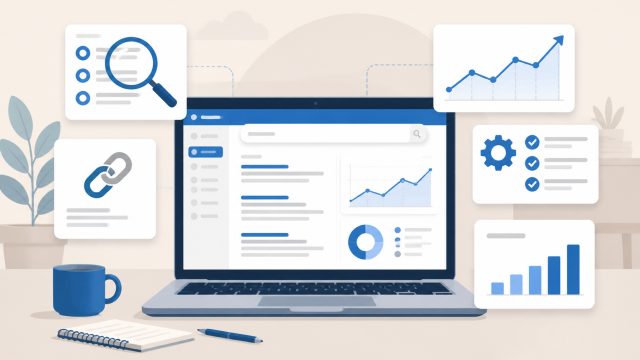
SEO has changed a lot since this list first ran, but the way you organize your tools has held up well. You do not need one giant app that does everything, and you do not need twenty. You need a tool for each core job: finding keywords, checking your technical health, watching your links, and tracking where you rank, now including where you show up in AI answers. Here are the five kinds of SEO software tools worth having in 2026, the tools that lead each category, and the one new category that did not exist when this article first published.
Key takeaways
- The five kinds of SEO tools in 2026: all-in-one platforms, keyword research, technical site audits, backlink analysis, and rank tracking plus AI search visibility.
- Most people should start with one all-in-one platform, Semrush or Ahrefs, plus the free Google Search Console, and add specialists only as they grow.
- The big shift since this list first ran: Google AI Overviews and assistants like ChatGPT answer many searches directly, so tracking visibility in AI results is now its own category.
- Some of the most important tools are free: Google Search Console and Google Keyword Planner cover audits and keyword ideas at no cost.
- The old lineup aged out. Long Tail Pro is a minor player now, Raven Tools shifted to reporting, and social media management was never really SEO.
1. All-in-one SEO platforms
The biggest change since 2014 is that most people now start with a single platform that folds keyword research, backlink data, rank tracking, and site audits into one subscription. For most businesses this is the first and sometimes only paid tool you need.
Semrush and Ahrefs lead here. Semrush starts around 139 dollars per month and has a limited free tier; Ahrefs starts around 129 dollars per month for its Lite plan, with a free Webmaster Tools option for your own verified site. Moz Pro is the more affordable third option, starting around 49 dollars per month. Pick one, learn it well, and you have covered four of the five categories below.
2. Keyword research
Keyword research is still the foundation: finding the terms people actually search, judging how hard they are to rank for, and matching them to what your pages offer. The all-in-one platforms all include strong keyword tools, but you do not have to pay to get started.
Google Keyword Planner is free with a Google Ads account and gives you real search-volume ranges straight from Google. AnswerThePublic is useful for question-based and long-tail phrases, which matter more now that people search in full sentences and ask AI assistants. The keyword explorers in Semrush and Ahrefs go deeper, with difficulty scores and competitor gap analysis. This category replaces niche 2014 picks like Long Tail Pro, which still exists but is no longer a mainstream choice.
3. Technical SEO and site audits
This is the category the original list barely covered, and it may be the most important. If search engines cannot crawl and render your site cleanly, no amount of keyword work will help. A technical audit tool crawls your site the way a search engine does and flags broken links, slow pages, duplicate content, and indexing problems.
Google Search Console is free, comes straight from Google, and is non-negotiable: it shows how Google sees your site, which queries you appear for, and any indexing issues. Screaming Frog is the classic desktop crawler, free for up to 500 URLs and about 199 pounds per year beyond that. Sitebulb is a friendlier alternative that explains what each issue means and how to fix it.
4. Backlink analysis
Links from other sites remain a real ranking signal, and you still want to know who links to you, who links to competitors, and whether any links could hurt you. A backlink tool maps that link profile and surfaces opportunities to earn more.
Ahrefs built its reputation on the size and freshness of its backlink index, and it is still a top pick here. Semrush offers comparable backlink analytics inside its platform, and Majestic is a long-running specialist, starting around 50 dollars per month, for teams that want a dedicated link tool with its own trust and citation metrics.
5. Rank tracking and AI search visibility
Rank tracking tells you whether your work is paying off: where your pages sit for target keywords over time, on desktop and mobile, by location. AccuRanker is a fast, dedicated rank tracker, and the all-in-one platforms include tracking too.
Here is the category that did not exist when this list first ran. Google now answers many searches with AI Overviews, and people increasingly ask ChatGPT, Perplexity, and Gemini instead of clicking a blue link. Being visible in those AI answers is its own discipline, sometimes called AI search optimization or generative engine optimization. Tools like Ahrefs Brand Radar, Profound, and Otterly.ai track whether and how your brand shows up in AI results. If a meaningful share of your audience is searching this way, this is worth watching now, not later.
What changed since this list first ran
Two shifts are worth calling out. First, the all-in-one platforms won: instead of stitching together a separate tool for every job, most teams run Semrush or Ahrefs plus free Google tools and add specialists only when they hit a real limit. Second, AI changed what SEO even means. With AI Overviews and assistants answering questions directly, ranking first is no longer the only goal; showing up in the AI answer matters too. The original version of this list also counted social media management as an SEO tool. It is not, so it has been dropped in favor of technical audits, which do belong here.
How to choose your SEO stack
So where should you start? Keep it simple.
If you are just starting. Set up Google Search Console and Google Keyword Planner today; both are free and essential. That alone covers audits and keyword ideas.
If you are ready to invest. Add one all-in-one platform, Semrush, Ahrefs, or Moz Pro, and resist buying a second until you know what it is missing.
As you grow. Layer in specialists where you feel real pain: Screaming Frog or Sitebulb for deeper technical work, AccuRanker for granular rank tracking, and an AI-visibility tool if your audience is moving to AI search.
Frequently asked questions
Do I need to pay for SEO tools?
Not to start. Google Search Console and Google Keyword Planner are free and cover site health and keyword ideas. You pay when you want deeper backlink data, competitor analysis, and automated audits from an all-in-one platform.
What is the best all-in-one SEO tool?
Semrush and Ahrefs are the two leaders, and most professionals use one or the other. Semrush is broader across marketing; Ahrefs is especially strong on backlinks. Moz Pro is the budget-friendly alternative.
What tools track AI search and Google AI Overviews?
This is a new and fast-moving category. Ahrefs Brand Radar, Profound, and Otterly.ai are among the tools that track whether your brand appears in AI Overviews and in answers from assistants like ChatGPT and Perplexity.
What replaced older tools like Long Tail Pro and Raven Tools?
Their jobs got absorbed into the all-in-one platforms. Keyword research and rank tracking now live inside Semrush, Ahrefs, and Moz, so most people no longer buy a separate tool for each.
How many SEO tools do I actually need?
For most small businesses, two: one all-in-one platform and free Google Search Console. Add specialists only when you have a specific need they solve better.
The bottom line
The five-category way of thinking still works; the names inside each category are what changed. Start with the free Google tools and one all-in-one platform, then add technical, rank-tracking, and AI-visibility specialists as your needs grow. Do not buy tools to feel prepared; buy the one that solves the job in front of you, and learn it before adding the next.
Building out your marketing stack? Browse our free marketing software research reports for side-by-side comparisons of leading SEO and marketing tools.

Sherman Hsieh
Independent analysis of enterprise software — ERP, CRM and more