
CRM
Green CRM: How Customer Systems Support ESG and Sustainable Business Practices

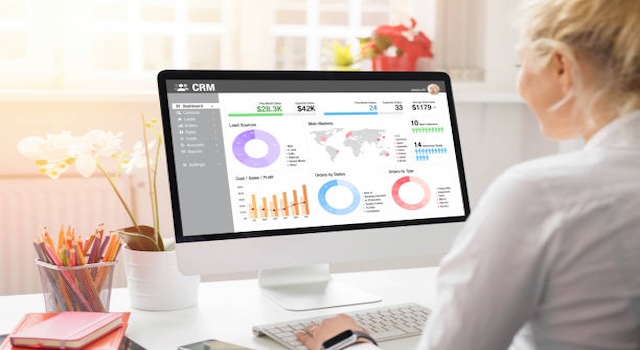
Green CRM is less a product you buy than a way you run the customer relationship management software you already have. The idea: use your CRM, and the sustainability tools that connect to it, to track environmental, social, and governance (ESG) data, cut the carbon tied to sales and marketing, and give customers and regulators verifiable proof of your commitments.
No major vendor sells a box labeled ‘green CRM.’ What exists in 2026 is a mainstream CRM (Salesforce, Microsoft Dynamics, HubSpot, or Zoho) running on carbon neutral cloud infrastructure, connected to a dedicated ESG or carbon accounting platform that does the measurement and reporting. This guide explains how that stack works, which real tools do the job, and what the shifting regulatory picture means for you.
Key takeaways
- ‘Green CRM’ means aligning your existing CRM with ESG goals, not buying a separate product category.
- The real work of measurement happens in dedicated platforms like Salesforce Net Zero Cloud, Microsoft Sustainability Manager, IBM Envizi, Watershed, and Persefoni, which connect to your CRM and ERP data.
- Your CRM contributes the customer, campaign, travel, and shipping data that feeds emissions tracking, plus paperless workflows that cut waste.
- The regulatory driver changed in 2026: the EU Omnibus package cut the number of companies in mandatory CSRD scope from about 50,000 to about 5,000 and pushed most reporting deadlines back two years.
- The lasting business case is trust and efficiency: verifiable ESG data builds brand credibility and digitized workflows lower cost, whether or not you are legally required to report.
What green CRM actually means
A CRM holds a large share of the data that ESG reporting needs: which customers you serve, how you reach them, how goods move to them, and how much travel and print your sales process consumes. Green CRM is the practice of putting that data to work for sustainability, either through features inside the CRM or through a connected platform built for emissions accounting.
The distinction matters because it sets expectations. Your CRM is the source of customer and activity data. A sustainability platform is where that data becomes a carbon figure, an audit trail, and a report. Treating the CRM as the whole solution is where the older ‘green CRM’ pitch overpromised. The honest version is a connected pair: system of record plus system of measurement.
How a CRM supports ESG initiatives
Mapped to the three pillars of ESG, a CRM connected to the right tools contributes in concrete ways.
- Environmental (E): estimate emissions tied to sales activity, optimize shipping and logistics routes, and cut carbon from print and travel based outreach by moving it digital.
- Social (S): record fair and accessible engagement practices, track supplier diversity and ethical sourcing across the partner base, and document customer commitments.
- Governance (G): keep transparent audit trails of decisions and disclosures, hold sustainability certifications against accounts, and report ESG metrics to stakeholders.
ESG and sustainability tools that connect to your CRM
These are the platforms doing the real measurement and reporting in 2026. Most integrate with the major CRM and ERP systems rather than replacing them. Pricing is almost always custom (enterprise quote), so treat these as capability comparisons.
| Platform | What it does | Best for |
|---|---|---|
| Salesforce Net Zero Cloud | Carbon and ESG tracking (Scope 1, 2, and 3) built on the Salesforce platform, next to your CRM data | Salesforce shops that want ESG reporting on the same platform as sales |
| Microsoft Sustainability Manager | Emissions data management across Azure, Dynamics 365, and Power BI | Microsoft and Dynamics 365 customers |
| IBM Envizi | Consolidates environmental data from many sources into one system of record | Large, complex organizations with scattered data |
| Watershed | Real time emissions tracking, regulatory reporting, and decarbonization planning | Enterprises with an established sustainability team |
| Persefoni | Enterprise carbon accounting and climate disclosure with a carbon ledger model | Companies that need audit ready, governance grade numbers |
| Workiva | ESG reporting with data validation, audit trails, and financial reporting integration | Finance and reporting teams that need assurance ready output |
On the ERP side, SAP (Sustainability Footprint Management and its Green Ledger) and Sphera cover similar ground for operations and supply chain. The right choice usually follows the platform you already run: pick the sustainability tool that connects cleanly to your CRM and ERP rather than adding a disconnected island of data.
The regulatory picture changed in 2026
For a few years, the EU Corporate Sustainability Reporting Directive (CSRD) looked set to pull tens of thousands of companies into detailed mandatory reporting. That changed. The EU Omnibus simplification package, including the Stop the Clock directive adopted in 2025, sharply narrowed the scope and delayed the timeline.
The practical result for 2026: the number of companies in mandatory CSRD scope dropped from roughly 50,000 to around 5,000. Mandatory reporting now applies to large EU companies with more than 1,000 employees and more than 450 million euros in turnover. Wave 1 (large public interest entities) reported first in 2025 on fiscal year 2024 data; the next wave was pushed to 2028, and non EU companies to 2029. The reporting standards themselves were trimmed, with mandatory data points cut by about 61%, though the climate standard kept its prominence. Listed small and mid sized companies came out of the mandatory net and can report voluntarily instead.
Two things follow. First, fewer companies face a hard legal deadline than the earlier headlines suggested, so building an ESG program purely to comply is a weaker argument in 2026 than it was. Second, the data infrastructure still pays off, because customers, investors, and large enterprise buyers increasingly ask for verifiable sustainability data regardless of the law. If a customer requires supplier ESG disclosures, a regulator’s threshold is beside the point.
Practical ways to green your CRM operations
Beyond formal reporting, a CRM connected to sustainability tooling supports everyday practices that cut waste and cost.
- Paperless workflows: move contracts, invoices, and signatures into digital flows to remove print entirely.
- Carbon neutral hosting: the major cloud CRMs run on data centers powered increasingly by renewable energy, so moving off on premise servers usually lowers your footprint.
- Smarter logistics: feed shipping and travel data from the CRM into route and trip planning to trim avoidable emissions.
- Values based segmentation: identify customers who prioritize sustainability and match them with the right products and messaging, honestly and without greenwashing.
- Supplier scoring: hold ESG or diversity scores against partner accounts so procurement decisions reflect them.
How to get started
A realistic rollout is staged rather than all at once.
- Audit your footprint: find the paper heavy, travel heavy, and energy heavy processes in your current customer operations.
- Set measurable targets: define concrete goals such as a set reduction in travel emissions or fully paperless contracts, with a date attached.
- Connect a measurement tool: integrate a platform like Net Zero Cloud, Sustainability Manager, or Watershed with your CRM and ERP so the numbers come from real data, not estimates.
- Automate the reporting: use dashboards and APIs to produce ESG figures on a schedule and share them with the stakeholders who ask.
- Train the team: make sure sales, marketing, and service staff understand what data to capture and why it matters.
Metrics worth tracking
Whatever tools you choose, a green CRM program is only as credible as the numbers behind it. The metrics that hold up to scrutiny include emissions tied to customer interactions and shipping, the share of workflows that are fully paperless, the percentage of suppliers meeting ESG criteria, the proportion of renewable energy behind your hosting, and customer response to sustainability initiatives. Pick a few you can measure accurately and report them consistently rather than publishing a long list you cannot verify.
Frequently asked questions
Is green CRM a separate type of software?
No. It is an approach that combines a mainstream CRM with a dedicated ESG or carbon accounting platform. The CRM supplies customer and activity data; the sustainability tool turns that into measured, reportable figures.
How does a CRM support ESG reporting?
It centralizes the sales, marketing, service, shipping, and travel data that emissions and social metrics draw on, then feeds it to a connected reporting platform. That gives you one consistent source instead of scattered spreadsheets.
Do I still need to worry about CSRD in 2026?
Only if you meet the reduced thresholds, now more than 1,000 employees and more than 450 million euros in turnover for large EU companies, with most deadlines pushed to 2028 and beyond. Many companies that expected to report no longer must, but customer and investor demand for ESG data continues regardless.
Is a green CRM program expensive?
The CRM you likely already run. The added cost is the sustainability platform, which is usually priced by enterprise quote. Smaller organizations can start with the ESG features inside their existing CRM and add a dedicated tool only when reporting demands grow.
The verdict
Green CRM works when you treat it as a connected system: a mainstream CRM for customer and activity data, paired with a real measurement platform such as Salesforce Net Zero Cloud, Microsoft Sustainability Manager, IBM Envizi, Watershed, or Persefoni for the carbon accounting and reporting. The 2026 regulatory retreat means fewer companies face a legal mandate, but the demand from customers, investors, and enterprise buyers for verifiable sustainability data keeps growing. Build the data foundation now, keep the metrics honest, and the reporting becomes routine whether or not the law requires it of you.
Choosing the CRM to build your green stack on?
Compare five leading CRM platforms side by side to find the right foundation.

Sherman Hsieh
Independent analysis of enterprise software — ERP, CRM and more