
Warehouse Management Software
Research and reviews for warehouse management software
-
About Warehouse Management Software
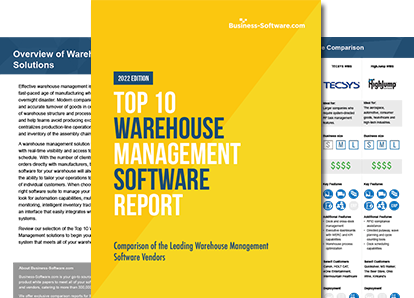
The pressure to keep supply chains smooth and efficient is as high as ever. The distribution channels and production centers that feed supply chains often experience fluctuations, creating a need to effectively manage warehouses for optimal performance. At the same time, warehouses and distribution centers must rapidly turn over their goods to ensure that they remain profitable. Browse the best business warehouse management software with Business-Software.com’s free comparison report of the Top 10 Warehouse Management Software solutions. Companies with elaborate networks of distribution centers and complex strategic warehouse planning will get the most benefit out of warehouse management software. Among the top-rated warehouse management software products are:- Accellos One Warehouse
- Aptean IMI Supply Chain
- Cadre Technologies LogiView
- Codeworks WMS
Articles
-
Inventory Management Software
Inventory Management Software Articles

Let's Talk inFlow: Behind the Software with Co-Founder Stephen Fung
By
inFlow is an top inventory management software solution designed around a deep understanding of the company's users. We sat down with Stephen Fung, co-founder of inFlow, to chat about the rewarding challenges of providing affordable -- even free -- inventory management solutions for small businesses.

The No-Cost Office, Part 5: Four Small Business Inventory Management Solutions that Cost Nothing
By
Integrated systems are powerful, useful tools, but if you’re not ready to spring for a comprehensive ERP solution, standalone inventory systems can provide invaluable benefits like inventory optimization, better supply chain visibility and up-to-the-minute financial reports and analyses. Here are 4 free inventory management software options for your small business inventory control needs.

A Closer Look at Warehouse and Inventory Management
By
Although it's easier than ever for consumers to buy products and have their purchases arrive the next day, it's had the opposite effect on businesses, making it even more difficult for warehouses to keep their supply chain running smoothly. The production centers and distribution channels that supply chains are built on often experience extreme fluctuations, which is why we need effective warehouse and inventory management systems now more than ever. So what's the difference?
Behind the Software Q&A with Unleashed Software CEO Gareth Berry
By
For this edition of Behind the Software, in our Q&A with Unleashed Software CEO Gareth Berry we discussed the company's decision to develop a cloud-based system and how their system is able to comprehensively address the unique demands of an inventory-driven operation.
-
Warehouse Management Software
Warehouse Management Software Articles
A Closer Look at Warehouse and Inventory Management
By
Although it's easier than ever for consumers to buy products and have their purchases arrive the next day, it's had the opposite effect on businesses, making it even more difficult for warehouses to keep their supply chain running smoothly. The production centers and distribution channels that supply chains are built on often experience extreme fluctuations, which is why we need effective warehouse and inventory management systems now more than ever. So what's the difference?
From the Community: Best Warehouse Management System?
By
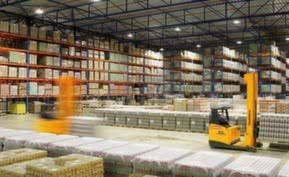
This week’s community question comes from Varun K., who asks, “What is the best warehouse management system for a retailer with both online and brick-and-mortar capabilities?” A top WMS with robust ecommerce capabilities can handle the needs of a warehouse with both a physical and online presence. We’ve chosen 3 WMS solutions that could simplify operations for Varun’s warehouse.

Behind the Software Q&A with BlueLink CEO Mark Canes
By
For our Q&A with BlueLink, we spoke with CEO Mark Canes on the origins of his company, the development of the ERP industry and how to design systems that speak to the needs of smaller organizations.

Top Cloud-Based Warehouse Management Systems
By
Any company that keeps major amounts of inventory is going to need a quality warehouse management system. It doesn't matter how elite your sales team is at closing deals or even how good your product is if it never reaches the customer on a consistent basis thanks to spotty or downright dysfunctional supply chain and warehouse management. We put together a list of five WMS vendors who offer cloud-based solutions to try and shed a bit more light on this nascent subsection of the segment.
-
View All Blog Posts
Top Warehouse Management Blog Posts
From the Community: Best Warehouse Management System?
By
This week’s community question comes from Varun K., who asks, “What is the best warehouse management system for a retailer with both online and brick-and-mortar capabilities?” A top WMS with robust ecommerce capabilities can handle the needs of a warehouse with both a physical and online presence. We’ve chosen 3 WMS solutions that could simplify operations for Varun’s warehouse.
A Closer Look at Warehouse and Inventory Management
By
Although it's easier than ever for consumers to buy products and have their purchases arrive the next day, it's had the opposite effect on businesses, making it even more difficult for warehouses to keep their supply chain running smoothly. The production centers and distribution channels that supply chains are built on often experience extreme fluctuations, which is why we need effective warehouse and inventory management systems now more than ever. So what's the difference?
Top Cloud-Based Warehouse Management Systems
By
Any company that keeps major amounts of inventory is going to need a quality warehouse management system. It doesn't matter how elite your sales team is at closing deals or even how good your product is if it never reaches the customer on a consistent basis thanks to spotty or downright dysfunctional supply chain and warehouse management. We put together a list of five WMS vendors who offer cloud-based solutions to try and shed a bit more light on this nascent subsection of the segment.
Popular Warehouse Management Solutions

Epicor Prophet 21 Distribution Software
Epicor Prophet 21, previously known as Activant, is a wholesale distribution ERP solution that utilizes a Windows-based platform and SQL Server database. Prophet 21 has the familiarity of Window’s programs which reduces the amount of time it takes new learners to feel comfortable with the solution. The openness of the SQL Server database helps companies to adapt to changes more quickly and helps them maintain their competitiveness.

NetSuite ERP
NetSuite ERP integrates with existing web and CRM investments, providing a cloud financial management solution that’s woven into a company’s broader business systems. Additionally, users can easily scale into NetSuite’s other solutions by adding NetSuite CRM, Ecommerce, Professional Services Automation or global business management capabilities whenever businesses find the need for those solutions. NetSuite ERP delivers specific industry editions for wholesale distributors or manufacturers with multi-site production and inventory, software companies with complicated revenue recognition requirements, professional services organizations and more.

TECSYS WMS
TECSYS warehouse management software is a comprehensive, fully featured solution that can simplify warehouse processes for the user's company. TECSYS WMS's SOA architecture provides an open system which can be deployed on any sort of infrastructure and accessed from any device at any time.

HighJump WMS
HighJump WMS helps companies optimize the space that they have, equipment and their employees to help warehouses stay organized and run efficiently. HighJump WMS was designed to manage highly regulated and complex environments by providing WMS solutions built using industry best practices. These best practices are applied to receiving, pick/pack, inventory management, order processing, loading, shipping and other key warehouse functions. HighJump WMS can also be modified to company specific processes using HighJump adaptability tools to make sure companies can get the most out of HighJump WMS.

Infor LN
Infor LN ERP helps companies improve operational processes and respond to change by providing company-wide visibility into finance, operations, inventory and capacity. Using this top-rated ERP solution, companies will make more efficient use of material and production resources, turning capacity into capability. Infor LN helps reduce the design-to-deliver cycle time and bring new products to marker more profitably. Companies will be able to identify and react more quickly to changes with their supply chain and take advantage of opportunities to grow revenues.

SYSPRO ERP
SYSPRO ERP is an integrated and comprehensive ERP solution that comes with a broad range of modules to give businesses control over all their business processes. Built on scalable and secure architecture, SYSPRO ERP includes powerful business process and management tools, along with enhanced customization capabilities and a simple, intuitive user interface.